An ADA-compliant unit differs from a standard portable toilet in measurable ways. The floor space is roughly 5 feet by 5 feet to allow a 60-inch turning circle for a wheelchair, the entry sits flush with the ground…
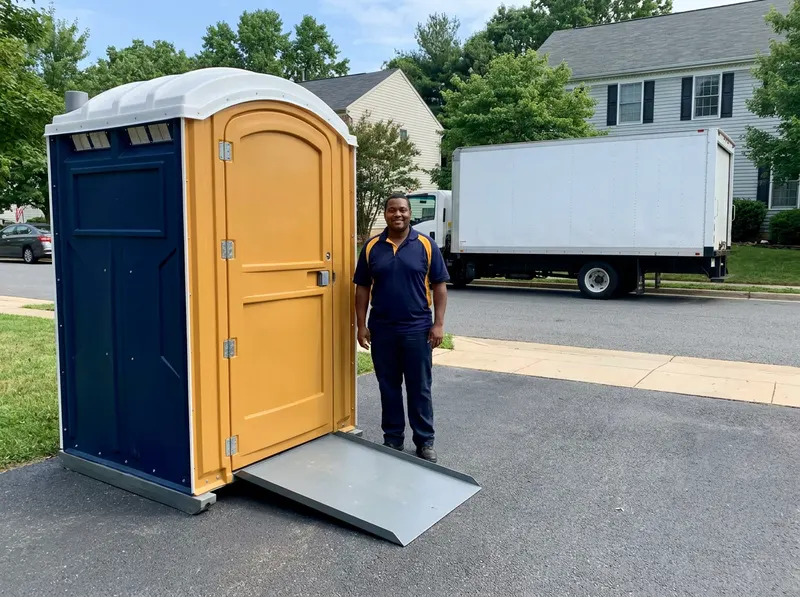
An ADA-compliant unit differs from a standard portable toilet in measurable ways. The floor space is roughly 5 feet by 5 feet to allow a 60-inch turning circle for a wheelchair, the entry sits flush with the ground with no step, and the door opens to about 36 inches so a chair can pass. Grab bars mount on the interior side and rear walls. A standard unit measures closer to 44 by 48 inches with a raised sill, which cannot accommodate a wheelchair. This is the crucial distinction: a regular porta potty is not usable by a wheelchair user, so the ADA model is a separate rental, not an upgrade toggle on the same box.
Decision-fit comes down to who attends and what the permit requires. Public events in the District that draw a general audience, festivals in Columbia Heights, a 5K staging near Anacostia Park, a wedding on the Georgetown waterfront, generally need at least one accessible unit in the restroom bank, and event permits for gatherings on the National Mall or the RFK Stadium campus commonly reference ADA access. If the site serves a private construction crew with no disabled workers, a standard unit may cover the requirement; if the site is a public-facing job or a workforce with an accessibility need, the ADA unit is the fit. The trade-off is footprint: an accessible unit occupies about 25 square feet versus roughly 15 for a standard one, so tight urban placements in Shaw, Petworth, or on Capitol Hill's narrow streets need a wider staging spot cleared before delivery.
Placement logistics matter in DC's older, denser corridors. The unit arrives on a lift-gate truck and needs a firm, level surface within a short carry of where the truck can legally stop, sloped brick alleys in Georgetown or curb-only frontage in Foggy Bottom can complicate a level set. For events on public space, a right-of-way or park permit is typically required from the District, and the accessible unit should sit on a paved, ramp-free path so a wheelchair reaches it without a curb. Our team can advise on placement when you describe the site.
Booking runs in three plain steps. First, call (240) 881-3803 or text a photo of the intended spot with the rental dates and headcount. Second, confirm the all-in quote, delivery, the weekly service that pumps and restocks the unit, and pickup are stated up front, so no delivery or servicing fee stacks on later. Third, the unit is delivered on the scheduled day and removed at rental end. Servicing for a multi-week rental in Brookland or Deanwood is included on a weekly cycle; higher-traffic events can add servicing visits.
Every job gets a firm, written price after a free on-site visit.
Tell us about your ada-compliant portable toilet rental job in Washington and we'll send a clear, written quote, usually the same day.
 Potomac Portable Toilet Rental