A construction unit differs from an event unit in servicing frequency, not just appearance. Job-site rentals are billed by the 4-week month with a weekly pump-out built into the price, because a crew of 8-10 workers…
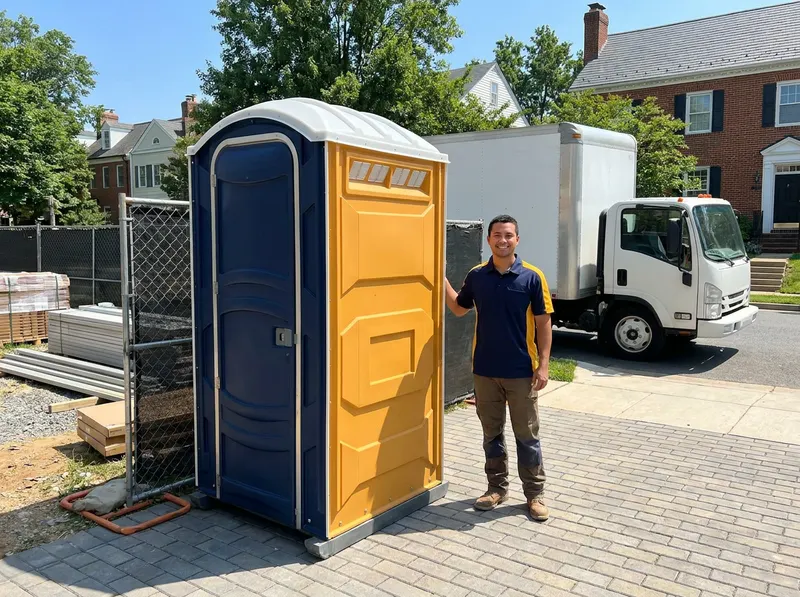
A construction unit differs from an event unit in servicing frequency, not just appearance. Job-site rentals are billed by the 4-week month with a weekly pump-out built into the price, because a crew of 8-10 workers fills a standard tank roughly every 5-7 working days. Event units are billed by the day and cleaned once. Confirming the servicing schedule up front is the fact that prevents the most common surprise: a quoted monthly rate that excludes weekly service is not a construction rate.
DC job sites vary by how much street and slab space is open. On tight Capitol Hill and Georgetown row-house lots, a single standard unit measuring about 43 inches square and 90 inches tall fits against a fence line or inside a job trailer footprint. Larger sites in Navy Yard and along the Anacostia waterfront often run banks of units plus a handwash station. The trade-off is straightforward: one standard unit covers a 10-worker crew for a week, while a 20-worker crew needs two units on the same weekly cycle to stay ahead of the tank, the deciding factors are crew size and how many working days pass between service visits.
Placement access drives scheduling more than distance does. A truck needs a clear path to set and later lift the unit; sites in Foggy Bottom, Shaw, and Columbia Heights with alley-only access or metered street frontage may require the unit staged where the crane or forklift can move it. For street placement on a public right-of-way, the District requires a public-space occupancy permit; units set entirely on private site slab in Brookland, Deanwood, or Anacostia do not. Confirming whether the unit sits on your slab or on the sidewalk determines whether a permit step is needed before delivery.
How it works in order: first, call (240) 881-3803 with the site address, crew size, and expected project length. Second, the unit count and weekly service day are set. Third, the unit is delivered and positioned where the truck can reach it. Fourth, a service technician returns on the same weekday each week to pump out and restock. Fifth, at project end the unit is lifted and hauled, with the final pickup already included in the monthly rate.
Every job gets a firm, written price after a free on-site visit.
Tell us about your construction site portable toilet rental job in Washington and we'll send a clear, written quote, usually the same day.
 Potomac Portable Toilet Rental