A weekend rental differs from a construction rental in one concrete way: the unit sits on-site for 2 to 3 days, not 28 days, so the price is a flat event fee rather than a monthly rate. The standard event unit measures…
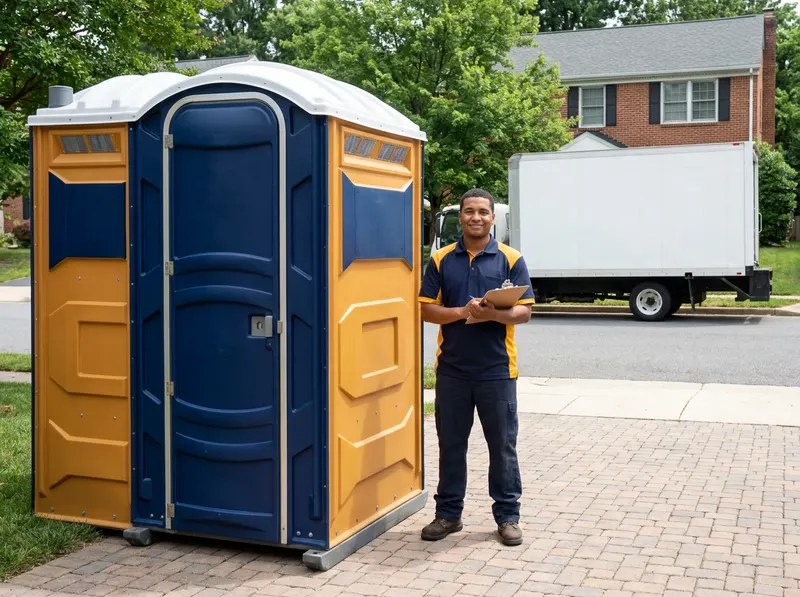
A weekend rental differs from a construction rental in one concrete way: the unit sits on-site for 2 to 3 days, not 28 days, so the price is a flat event fee rather than a monthly rate. The standard event unit measures about 43 inches wide and holds a 60-gallon tank, which serves roughly 100 to 150 uses before it needs servicing, enough for a single-day party of up to 75 guests without a mid-event pump. For a Saturday-into-Sunday festival or a two-day family reunion, planners add a second unit at every 50 guests beyond the first 75 to keep lines under a few minutes.
Delivery timing is the part DC events get wrong. On Capitol Hill, Georgetown, and Foggy Bottom, curb space is metered or permit-controlled, so a unit dropped on a public parkway or sidewalk needs a DC public-space permit from the District Department of Transportation; a unit placed entirely on private property, a Petworth backyard, a Brookland church lot, an Anacostia community garden, does not. Our team confirms which case applies before the truck rolls, because a wrongly placed unit on National Mall grounds or in a Rock Creek Park picnic area can be moved by the permitting authority. For events at Yards Park, Navy Yard plazas, or the RFK Stadium campus, the venue itself usually dictates the placement spot.
Choosing the right unit follows the event: for a Columbia Heights rowhouse birthday or a Shaw backyard wedding, a single standard unit at the $250 minimum handles it. For a Deanwood block party or a Petworth street festival drawing families with kids and older guests, an ADA-accessible unit, 60-plus inches of interior turning space, a ground-level entry, and grab bars, meets the wider need and is often required when the event uses public space. For a formal Georgetown reception, a flushing unit with an interior sink and a fresh-water foot pump reads far better than a standard model. The trade-off is straightforward: the standard unit is the lowest cost and drops anywhere a truck can reach; the flushing and ADA units cost more and need a slightly larger, more level footprint.
How the weekend service runs, in order: (1) the placement day and spot are confirmed by phone, including whether a public-space permit is needed; (2) the unit is delivered and serviced clean before guests arrive, usually Friday or Saturday morning; (3) it stays through the event window; (4) it is pumped and removed on the agreed pickup day, commonly Monday. Same-day and holiday drops are available on most weekends and public holidays, with Sunday delivery being the most limited slot in dense areas like Georgetown and Foggy Bottom where street access is tight.
The quoted event price already includes delivery, the pre-event service, and pickup, there is no separate haul-away or servicing charge added afterward for a standard 2-to-3-day window. Extra costs appear only in two named cases: a same-weekend service pump for an event exceeding 150 uses per unit, and a DC public-space permit fee paid to the District when the unit sits on public property. Both are stated up front, not discovered on the invoice.
Every job gets a firm, written price after a free on-site visit.
Tell us about your weekend & holiday event rental job in Washington and we'll send a clear, written quote, usually the same day.
 Potomac Portable Toilet Rental